(This website has been built from the old Flitcham.com files)

THE VILLAGE SIGN
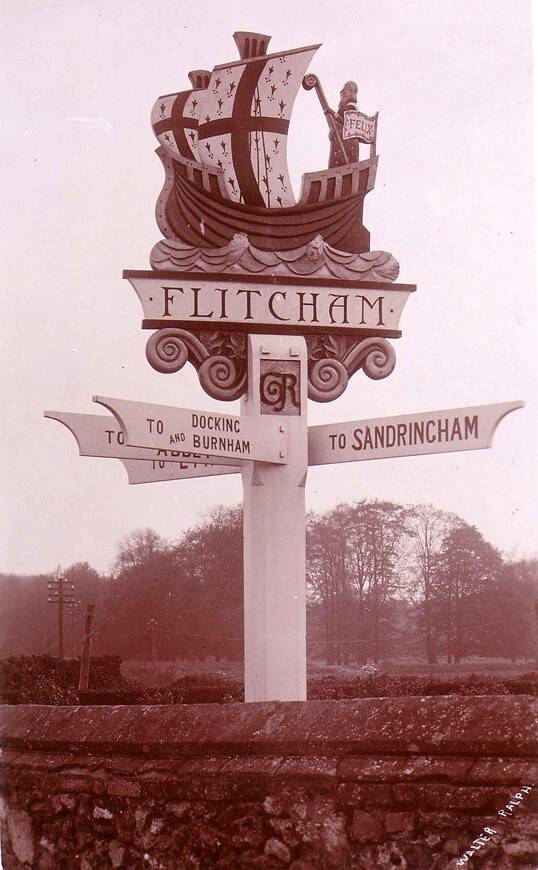
The first village signs in Britain are believed to have been the idea of King Edward VII who thought they would enhance the community spirit of his Sandringham Estate villages. He intended them for the Estate villages of Anmer, Babingley, Flitcham, Shernborne, West Newton and Wolferton. The idea was soon taken up by other Norfolk villages and later across Britain. Until the growth of car ownership, people rarely travelled far from their homes but by the 1920s, visiting motorists to an area needed to know what village they were passing through.
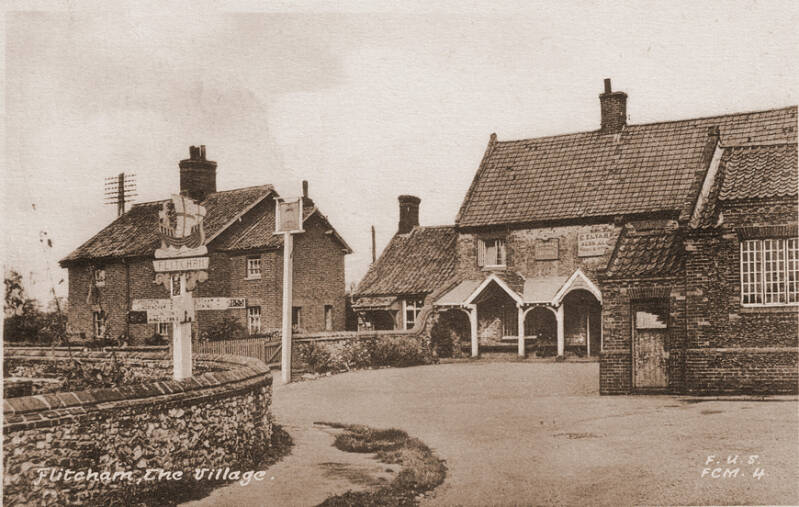
Flitcham's Sign was erected in 1912 as a gift from King George V and has always stood on the inside corner of Church Rd and the Hillington-Anmer Rd. It has taken on minor variations over the years and the current version, which was a gift from Richard and Pamela Cross to celebrate their 50 years residence at the village's Abbey Farm, once again incorporated the direction fingerboards which had been missing for several decades.
Flitcham's Sign features St Felix (d 648), the first Bishop of East Anglia who is reputed to have sailed up the Babingley river (and to have been rescued by some kind hearted beavers when his ship was wrecked...).
The little Babingley River flows east to west Just to the south of the village. This small stream has waters so cold and clear, that legend has it that the waters flow underground direct from glaciers in the Alps and across the entire continent to re-emerge in springs that source the river here in Norfolk.

Some believe that the village's name was a corruption of ST Felix's name. But Anglo Saxons rarely named settlements after individuals and Parkin's book of 1808 -"An Essay Towards a Topographical History of the County of Norfolk" suggests that the Babingley would flood the adjoining meadows and form ice "Flices". Ice had long been prized and stored for its ability to preserve food through winter - especially meat - long before its use in fancy desserts in later Mediaeval times
.
